16 January 2026 • 4 Mins Read

7 Fun History Lesson Plan Ideas & Activities

Discover history lesson plan ideas and activities to enrich your lessons and engage your students with roleplay, debates, classroom games, and more. 

While history is far from a boring subject, many students can feel overwhelmed with the information, key dates, and events that they’ll have to memorise for their exams. Teachers must balance the context of the curriculum with practical skills and stories that engage students. 

How can you pique their interest from the start of the lesson to the final reflections? It all comes down to the planning. By including the right ideas and activities in your lesson planning, you can bring the past to life - while also connecting students with key concepts from the curriculum.

What does a good history lesson plan look like?

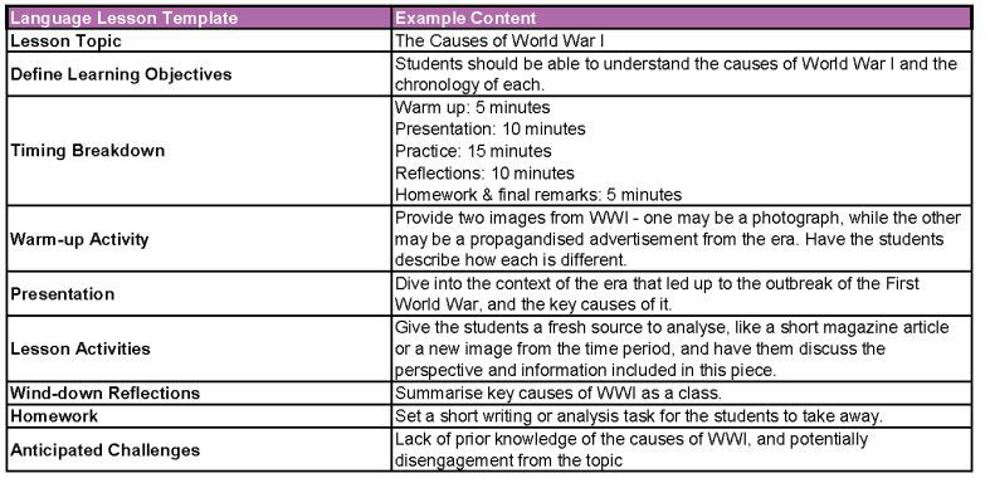
A clear history lesson plan should come with a diverse agenda of activities, clear objectives, historical context, and a healthy dose of critical thinking practice. Interpreting evidence and comparing historical accounts is key in many curricula, making it important to set context and build empathy for those who lived before. 

A good history lesson plan could look like this:


By anticipating the challenges of the lesson before you sit in front of your class, you can think about how to make your topic interesting and keep students engaged, meeting them on their current level. Helpful tips might include:

  • Activate knowledge from prior lessons and ask yourself: what previous knowledge does your class have? What additional context will they need to understand the full lesson?

  • Give students time and space to discuss their thoughts on key people and events, rather than making every lesson a lecture.

  • Blend sources, e.g. by using a mix of videos, images, and text throughout the lesson, you can appeal to a wider variety of learning styles within your class, and support students who may struggle with reading comprehension. 

  • Bring history down to earth by gathering first-person and contemporary sources, including newspaper articles, diary entries, letters, and other testimonials that put students in the shoes of people who lived through history.

  • Make real-world connections that students will understand, so they know why the topic matters to them in modern day. Pre-made history learning resources can make this easier as well, especially for harder topics to cover, like D-Day or the impact of the Holocaust. 

  • Create cross-curricular links within your lesson. For example, talk about Wilfred Owen to link the history of the Great War to literature classes, or use sources from the Art curriculum that link to a historical period you’re planning to cover.

  • Vary your classroom activities to tailor your lessons to different types of learners and abilities.

7 engaging history lesson plan ideas & activities

Making history engaging isn’t just vital for students to get a good grade - the lessons they learn in their class come with transformative skills that will follow them into later life, like research, critical thinking, and enjoyment of the subject. 

1. Start with an engaging hook

Do you have to teach history chronologically? Not necessarily. While it’s important for students to understand a clear timeline of events, one way to make sure they’re engaged from the beginning of your class is to start with something emotionally resonant, like:

  • The assassination of Archduke Franz Ferdinand that began the First World War.

  • The decimation of the cattle population in the Old American West.

  • The impact of WWII on the Jewish population in Europe.

Once you have shown students the results of an era of history, you have their attention. From here, you can answer their questions and fill in the gaps with the context they’ll be curious to know.

Top tip: Think about your lesson as a story, and narrate as if you are trying to capture an audience - because you are! Putting energy into making classic timelines into cohesive narratives usually pays off by making the subject matter of your lesson more memorable. 

2. Make technology (and AI) your ally

While there are many AI teaching tools available, for history teachers, artificial intelligence opens up even more doors. Now, you can bring in any guest speaker you like, from ancient Greek philosophers and historians to cowboys, kings, and wartime figures like Winston Churchill. 

You may wish to use a dedicated AI chatbot or provide ChatGPT with a prompt to ‘Roleplay as X historical figure’ and attach curriculum-specific PDFs to give the technology the context it needs. This can be a fun way to encourage students to ask questions. 

Just remember to fact-check the answers the chatbot provides, and use the resulting conversation to lead into your classroom discussion.

Top tip: if you want to avoid using AI in your lesson planning, you can still lean on technology through the use of videos, audio recordings, or unique sources found on the internet. Including multimedia sources can help engage students who have difficulty reading, ensuring you speak to students with different learning styles. History apps and online simulation games can also help to draw the attention of your class. 

3. Make it personal

Historical events can feel completely separate from students’ lives, which can lead to disengagement or the feeling that history is ‘boring’. By bringing history back down to earth, students realise its importance and significance. 

Whether you have access to historical antiques, family stories, or wish to encourage students to discover historical accounts within their own family, there are many ways to make history personal. This is especially relevant for students who are learning about the First and Second World Wars, or are participating in Remembrance Day classroom activities where their own heritage may be relevant. 

Top tip: Task your students with learning about their own family history and writing a short essay on how their families were impacted by the First or Second World War. Otherwise, encourage them to consider how different historical innovations and events impact their lives today, and use this as the basis for a writing reflective exercise.

4. Focus on individual people from history

The big picture and context around key historical events are important, but if you want students to feel emotionally invested in the topic, it’s important to focus on individuals from history as well. 

For example, rather than having students learn about Native American tribes as part of the Old American West, focus on key historical figures from relevant tribes to bring the history to life in a more personal, accessible way. Use extracts from people alive at the time to describe the events in the curriculum.

5. Try roleplay and immersive activities

Once you’ve explained the context of a historical event or era to your students, you can immerse them in the mindset of key figures. Assign them to separate sides of a war, or different characters from the same era, and encourage classroom debates in-character. 

Of course, you’ll want to use your best judgment in organising these types of activities - not every era or historical figure may be appropriate for classroom immersion.

6. Examine multiple perspectives of key events

Once students have an overview of a period in history, it’s time to expose them to a revisionist perspective. For example, Europeans in the Old American West viewed the land in a very different way from the Indigenous people, and sources from both sides may be useful to compare, contrast, and discuss as a class. 

It is also important to show students how perspectives can change over time. For example, studying a personal account from a soldier in WWI and comparing this to later views of the same time period or battle from sources in the 1950s, 1980s, or modern day can be useful in helping students develop a holistic view and personal opinions on key events.

Top tip: This kind of comparative activity can be used to lead students into engaging activities like class discussions, debates, or personal reflections.

7. Get into gamification

Sometimes, classroom discussions and debates can feel repetitive. However, while history often covers heavy topics, lessons can still have some entertainment value. When this happens, there are a few online games you can try. For example, BBC Bitsesize offers online games for KS1, KS2, and KS3 - students can access these at home as well as in the classroom, so this can be a fun homework assignment towards the end of the term or at the beginning when you are easing students into the semester.

If you’d prefer to keep students away from computer screens, you can also try these in-classroom alternatives to gamify your lesson:

  • Timeline flashcards - write the historical event on one side of the card, and the date on the other. The students should have a set time to arrange the cards in chronological order, and flip them over at the end of the activity to see if they were right. 

  • Kahoot quizzes - while these are technically online, they can be a great icebreaker to quickly establish what foundational knowledge students have on your lesson’s topic. 

  • History pictionary - have students draw a historical event, name, or era from a pile, then have them act out or draw their topic while the rest of the class guesses. This can be a fun way to captivate students and break up the monotony of a lesson. 

8. Book a history school trip

Every now and again, it’s time to bring the lesson outside of the classroom with a history school trip. When students can connect the curriculum to their own personal experiences - like touring a former battlefield or going on a guided trip to Paris - it means they connect emotionally and intellectually with their studies. 

The benefits of school trips include:

  • Stronger critical thinking skills, as students can inspect artefacts and museum accounts and compare these with other sources when they’re back in the classroom.

  • Improved collaboration between classmates, with students often being placed in groups throughout a trip - teachers can encourage this by assigning group projects at different sites, or by ensuring students are grouped together for activities once they return from the trip. 

  • Cross-curricular connections, for example, students on a history trip to New York will visit a number of museums and historical sites like Ellis Island Museum and a tour of the United Nations, which can foster interests in history, immigration, politics, and more.  

Explore tailored history school trips with NGT

While a creative history lesson plan can spark curiosity, the power of personal experience means that school trips outside of the classroom are the perfect way to engage with the curriculum. Whether you choose self-guided tours or prefer to have a guide to manage the logistics, a few days abroad can be just the thing to invigorate students for your next lesson.

Every history tour with Next Generation Travel is designed to complement the curriculum, whether students are visiting Flanders fields in Ypres or the many Jewish heritage museums and memorials in Krakow.

NGT history resources

Holocaust Memorial Day - Free Educational Resources
Latest News, Destinations, Trip Planning, Learning Outcomes • 3 Mins Read

Take a look at these free resources and activities to help support your lesson planning and commemoration events for Holocaust Memorial Day on 27th January.

Remembrance Day Ideas and Activities for Teachers
Events, Latest News • 4 Mins Read

Make Remembrance Day impactful with these classroom activities and ideas to complement the curriculum and bring history to life for your students.

History Trip To History Teacher: Caitlyn’s Story
Case Studies, Customer Experiences • 4 Mins Read

We spoke to Caitlyn Palmer, who went on a battlefields trip with Anglia Tours in 2014, and then went on to become a history teacher herself! Find out more about her experiences in our latest post.

VE Day 80th Anniversary resources and activities
Events, Learning Outcomes, Latest News • 5 Mins Read

This year is the 80th anniversary of VE Day on 8th May 2025. Keep reading for some of the best 80th anniversary VE Day teaching resources.

Interested n a history trip?

Request a quote today to bring history to life for your students.

Find out more